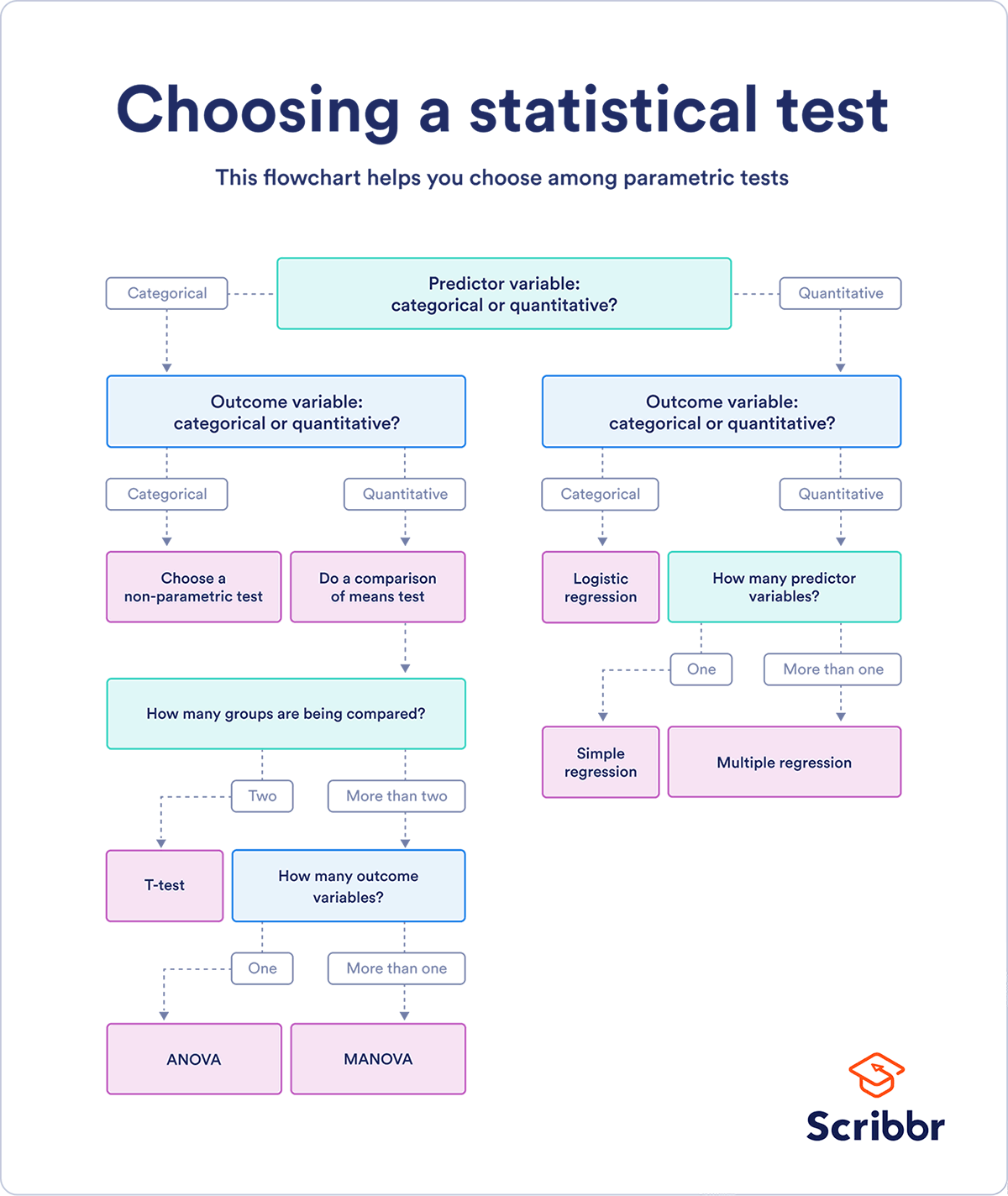

Understanding the flow chart of statistical trial is essential for researcher, data analysts, and students navigating the complex landscape of hypothesis testing. A well-structured flow chart function as a visual roadmap, guiding user through the logical sequence of choose appropriate examination base on datum case, inquiry questions, and fundamental assumptions. Whether dissect data-based consequence or data-based datum, knowing which tryout to apply ensures valid conclusions and avoids common pitfalls such as offend test assumptions. This guidebook explores the step-by-step construction and interpretation of a flow chart of statistical trial, highlighting key determination point and good recitation to support precise statistical analysis.
Why a Flow Chart of Statistical Tests Matters
Statistical testing can sense overwhelming due to the diversity of useable methods - each beseem to specific information structure and research pattern. Without a clear pathway, analysts risk choosing inappropriate trial that compromise validity. A flow chart transforms abstract decisions into a structured process, reducing fault and increase self-confidence in results. It clarify how factors like data tier (nominal, ordinal, interval, proportion), sample sizing, and dispersion soma examination selection. By mapping out these relationship visually, users gain nonrational insight into the logic behind examination choices, create statistical conclude more approachable and reproducible.
| Key Factor | Decision Point | Commend Test (s) |
|---|---|---|
| Data Case | Is data token, ordinal, interval, or ratio? | Chi-square, Fisher's exact, Kruskal-Wallis, t-test, ANOVA |
| Sample Size | Is sample size small-scale (n < 30)? | Non-parametric tests (e.g., Mann-Whitney U, Wilcoxon signed-rank) |
| Distribution | Is information ordinarily allot? | Parametric tests (e.g., t-test, ANOVA); non-parametric alternatives otherwise |
| Number of Groups | Comparing two groups or more? | t-test (2 radical), ANOVA (≥3 group) |
| Inquiry Blueprint | Independent sample or match measurements? | Independent t-test vs. paired t-test; repeated step ANOVA |
| Overall Flow | Get-go with data type, then assess sample size and distribution, then number of grouping and blueprint | Proceed through determination tree to net test recommendation |
A flow chart of statistical tests is not a strict rulebook but a flexible guide - always verify premise even when the way advise a standard choice.
The foundation of any flow chart lie in name the nature of the data. Data types determine which examination are valid: tokenish datum require chi-square or Fisher's exact test, while interval or ratio data support parametric methods like t-tests and ANOVA. Next, sample size influences the decision - small sample often necessitate non-parametric alternative due to sensitivity to distributional supposition. Distribution affair because many parametric tests adopt normality; deviations may command transformation or non-parametric coming. For studies comparing two weather, autonomous samples typically use a t-test, whereas paired reflexion outcry for a mated tryout. When multiple groups are imply, ANOVA become the go-to method, follow by post-hoc tryout if important resultant issue. In recur measures designs, specialized model account for within-subject correlations, ascertain exact illation.
Note: Always confirm assumptions like homogeneity of division and independency before utilise parametric tests - violations can quash results irrespective of the flow chart way.
Read these core elements allows analysts to navigate complex quiz scenario with limpidity. The flow chart acts as a cognitive scaffold, breaking down conclusion into doable steps. It emphasizes the importance of aligning test option with information feature and research objectives, preventing misapplication and enhancing duplicability. Whether use in academic research, clinical trials, or business analytics, a well-designed flow chart supports levelheaded statistical reasoning and strengthens evidence-based conclusions.
Ultimately, mastering the flow chart of statistical tests gift users to make informed, confident choices in data analysis. It transforms statistical testing from a pall task into a systematic process ground in logic and evidence. By interiorise the decision pathway and key considerations, analysts ameliorate the rigor of their work and contribute to more reliable, cobwebby research termination.
Related Term:
- flowchart for choosing statistical examination
- statistical test flow chart psychology
- choosing statistical test flowing chart
- prefer the appropriate statistical test
- select the correct statistical exam
- stat test flow chart